6/18/2026
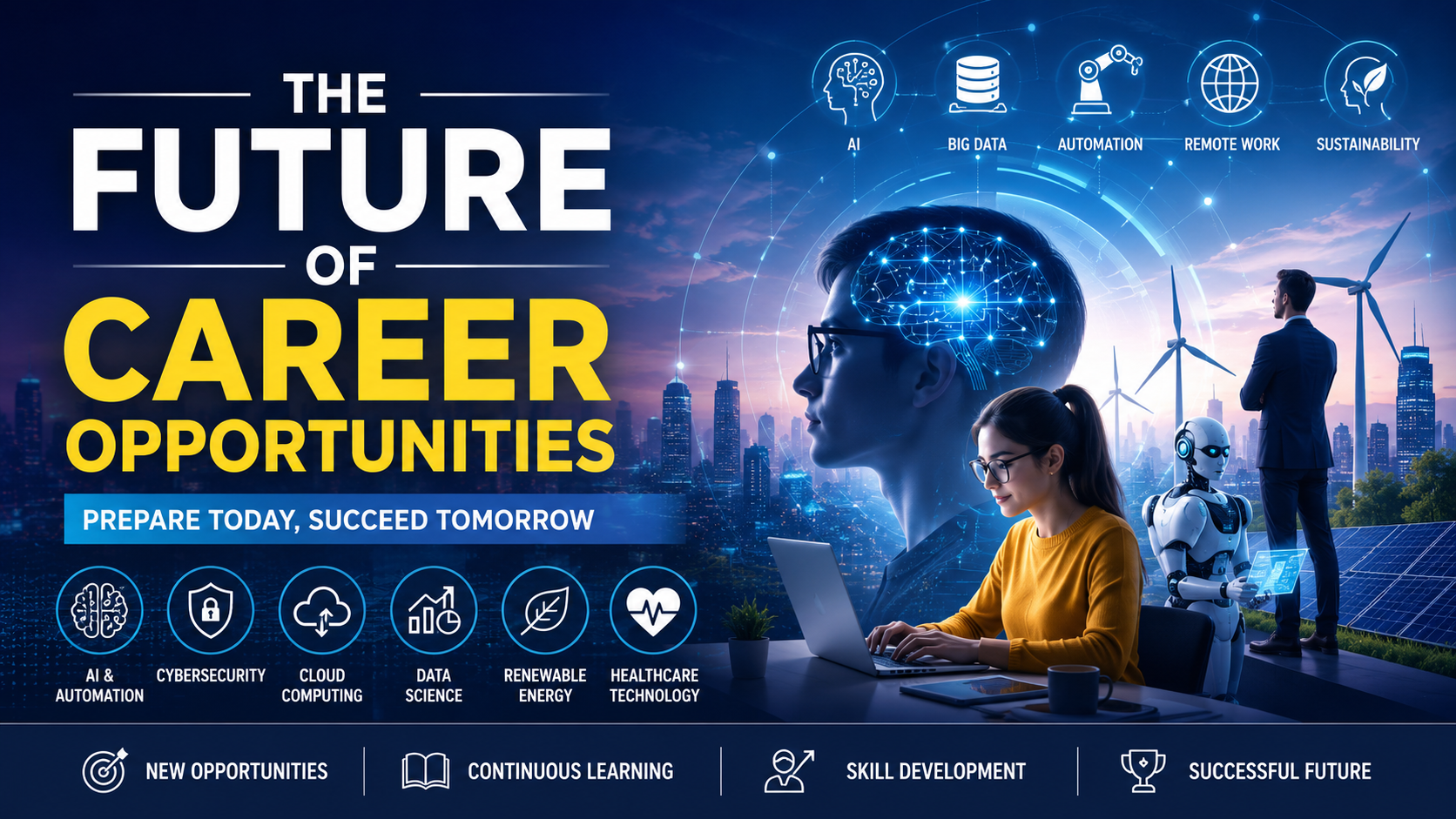
The world of work is changing faster than ever before. Technological advancements, artificial intelligence (AI), automation, remote work, and digital transformation are creating new career opportunities while transforming traditional jobs. As industries evolve, professionals must adapt to new skills, tools, and ways of working to remain competitive in the job market.
Understanding the future of careers is essential for students, professionals, entrepreneurs, and organizations looking to thrive in the coming decades. This article explores emerging career trends, in-demand skills, and the opportunities that will shape the workforce of the future.
---
Why Careers Are Changing
Several factors are driving changes in the global job market:
1. Artificial Intelligence and Automation
AI-powered systems are automating repetitive and routine tasks across industries. From customer service chatbots to automated manufacturing systems, technology is increasing efficiency while changing job roles.
Rather than replacing all human jobs, AI is creating demand for professionals who can develop, manage, and work alongside intelligent systems.
2. Digital Transformation
Businesses are rapidly adopting digital technologies to improve operations and customer experiences. This transformation is creating opportunities in software development, cybersecurity, cloud computing, digital marketing, and data analysis.
3. Remote and Hybrid Work
The rise of remote work has expanded employment opportunities beyond geographical boundaries. Companies can now hire talent globally, while professionals can work from anywhere.
4. Sustainability and Green Economy
Environmental concerns are driving investments in renewable energy, sustainable infrastructure, and eco-friendly technologies. As a result, new career paths are emerging in sustainability and environmental management.
---
Top Career Opportunities of the Future
AI engineers design and develop intelligent systems capable of learning and making decisions.
Responsibilities:
- Building machine learning models
- Developing AI applications
- Training algorithms
- Improving automation systems
Required Skills:
- Python programming
- Machine learning
- Deep learning
- Data analysis
Career Outlook:
Demand for AI professionals is expected to grow significantly across healthcare, finance, education, and technology sectors.
---
Data has become one of the most valuable assets for organizations. Data scientists analyze large datasets to help businesses make informed decisions.
Responsibilities:
- Data collection and processing
- Predictive analytics
- Business intelligence
- Statistical modeling
Required Skills:
- SQL
- Python
- Statistics
- Data visualization
Career Outlook:
Data science remains one of the highest-paying and fastest-growing professions worldwide.
---
As cyber threats continue to increase, organizations require experts to protect digital assets and sensitive information.
Responsibilities:
- Network security
- Threat detection
- Security audits
- Incident response
Required Skills:
- Ethical hacking
- Network security
- Risk management
- Security tools
Career Outlook:
Cybersecurity professionals will remain highly sought after due to growing digital security concerns.
---
Cloud technology powers modern businesses by enabling scalable and flexible computing solutions.
Responsibilities:
- Managing cloud infrastructure
- Deploying applications
- Cloud security
- Performance optimization
Required Skills:
- AWS
- Microsoft Azure
- Google Cloud Platform
- DevOps
Career Outlook:
Cloud computing continues to be a critical technology driving business innovation.
---
Businesses increasingly rely on online channels to reach customers.
Responsibilities:
- Search Engine Optimization (SEO)
- Content marketing
- Social media management
- Online advertising
Required Skills:
- SEO
- Google Analytics
- Content creation
- Social media strategy
Career Outlook:
Digital marketing careers will continue expanding as online commerce grows.
---
Software developers remain essential in nearly every industry.
Responsibilities:
- Application development
- Website creation
- Mobile app development
- Software testing
Required Skills:
- JavaScript
- Python
- Java
- Problem-solving
Career Outlook:
The demand for software developers is expected to remain strong due to ongoing digital transformation.
---
The transition toward clean energy is creating exciting opportunities.
Responsibilities:
- Solar energy systems
- Wind power projects
- Energy efficiency planning
- Sustainability consulting
Required Skills:
- Environmental science
- Energy systems
- Project management
Career Outlook:
Green jobs are expected to grow rapidly as countries invest in sustainable development.
---
Technology is transforming healthcare through telemedicine, AI diagnostics, and digital health platforms.
- Health data management
- Medical software development
- Healthcare analytics
- Healthcare knowledge
- IT systems
- Data analysis
Healthcare technology careers are expected to expand significantly in the coming years.
---
- Artificial Intelligence
- Data Analytics
- Programming
- Cloud Computing
- Cybersecurity
- Digital Marketing
- Communication
- Leadership
- Creativity
- Adaptability
- Critical Thinking
- Emotional Intelligence
Employers increasingly value professionals who combine technical expertise with strong interpersonal skills.
---
The future job market requires continuous learning. Professionals should:
- Take online courses
- Earn industry certifications
- Attend workshops and seminars
- Learn emerging technologies
- Build practical projects
Continuous skill development helps individuals stay relevant and competitive.
---
Students preparing for future careers should focus on:
1. Learning digital skills early.
2. Building a strong online portfolio.
3. Participating in internships.
4. Developing communication skills.
5. Staying informed about industry trends.
A proactive approach can significantly improve career prospects.
---
While new opportunities are emerging, challenges also exist:
- Rapid technological changes
- Skill gaps
- Increased competition
- Automation of repetitive tasks
---
The future of careers is filled with exciting possibilities driven by technology, innovation, and global connectivity. Artificial intelligence, cybersecurity, data science, cloud computing, renewable energy, and healthcare technology are among the fastest-growing fields.
Success in tomorrow's workforce will depend on adaptability, continuous learning, and the ability to combine technical knowledge with human-centered skills. By preparing today for the jobs of tomorrow, individuals can build rewarding, future-proof careers in an ever-evolving world.
Introduction
The world of work is changing faster than ever before. Technological advancements, artificial intelligence (AI), automation, remote work, and digital transformation are creating new career opportunities while transforming traditional jobs. As industries evolve, professionals must adapt to new skills, tools, and ways of working to remain competitive in the job market.
Understanding the future of careers is essential for students, professionals, entrepreneurs, and organizations looking to thrive in the coming decades. This article explores emerging career trends, in-demand skills, and the opportunities that will shape the workforce of the future.
---
Why Careers Are Changing
Several factors are driving changes in the global job market:
1. Artificial Intelligence and Automation
AI-powered systems are automating repetitive and routine tasks across industries. From customer service chatbots to automated manufacturing systems, technology is increasing efficiency while changing job roles.
Rather than replacing all human jobs, AI is creating demand for professionals who can develop, manage, and work alongside intelligent systems.
2. Digital Transformation
Businesses are rapidly adopting digital technologies to improve operations and customer experiences. This transformation is creating opportunities in software development, cybersecurity, cloud computing, digital marketing, and data analysis.
3. Remote and Hybrid Work
The rise of remote work has expanded employment opportunities beyond geographical boundaries. Companies can now hire talent globally, while professionals can work from anywhere.
4. Sustainability and Green Economy
Environmental concerns are driving investments in renewable energy, sustainable infrastructure, and eco-friendly technologies. As a result, new career paths are emerging in sustainability and environmental management.
---
Top Career Opportunities of the Future
1. Artificial Intelligence Engineer
AI engineers design and develop intelligent systems capable of learning and making decisions.
Responsibilities:
- Building machine learning models
- Developing AI applications
- Training algorithms
- Improving automation systems
Required Skills:
- Python programming
- Machine learning
- Deep learning
- Data analysis
Career Outlook:
Demand for AI professionals is expected to grow significantly across healthcare, finance, education, and technology sectors.
---
2. Data Scientist
Data has become one of the most valuable assets for organizations. Data scientists analyze large datasets to help businesses make informed decisions.
Responsibilities:
- Data collection and processing
- Predictive analytics
- Business intelligence
- Statistical modeling
Required Skills:
- SQL
- Python
- Statistics
- Data visualization
Career Outlook:
Data science remains one of the highest-paying and fastest-growing professions worldwide.
---
3. Cybersecurity Specialist
As cyber threats continue to increase, organizations require experts to protect digital assets and sensitive information.
Responsibilities:
- Network security
- Threat detection
- Security audits
- Incident response
Required Skills:
- Ethical hacking
- Network security
- Risk management
- Security tools
Career Outlook:
Cybersecurity professionals will remain highly sought after due to growing digital security concerns.
---
4. Cloud Computing Engineer
Cloud technology powers modern businesses by enabling scalable and flexible computing solutions.
Responsibilities:
- Managing cloud infrastructure
- Deploying applications
- Cloud security
- Performance optimization
Required Skills:
- AWS
- Microsoft Azure
- Google Cloud Platform
- DevOps
Career Outlook:
Cloud computing continues to be a critical technology driving business innovation.
---
5. Digital Marketing Specialist
Businesses increasingly rely on online channels to reach customers.
Responsibilities:
- Search Engine Optimization (SEO)
- Content marketing
- Social media management
- Online advertising
Required Skills:
- SEO
- Google Analytics
- Content creation
- Social media strategy
Career Outlook:
Digital marketing careers will continue expanding as online commerce grows.
---
6. Software Developer
Software developers remain essential in nearly every industry.
Responsibilities:
- Application development
- Website creation
- Mobile app development
- Software testing
Required Skills:
- JavaScript
- Python
- Java
- Problem-solving
Career Outlook:
The demand for software developers is expected to remain strong due to ongoing digital transformation.
---
7. Renewable Energy Specialist
The transition toward clean energy is creating exciting opportunities.
Responsibilities:
- Solar energy systems
- Wind power projects
- Energy efficiency planning
- Sustainability consulting
Required Skills:
- Environmental science
- Energy systems
- Project management
Career Outlook:
Green jobs are expected to grow rapidly as countries invest in sustainable development.
---
8. Healthcare Technology Professional
Technology is transforming healthcare through telemedicine, AI diagnostics, and digital health platforms.
Responsibilities:
- Health data management
- Medical software development
- Healthcare analytics
Required Skills:
- Healthcare knowledge
- IT systems
- Data analysis
Career Outlook:
Healthcare technology careers are expected to expand significantly in the coming years.
---
Essential Skills for Future Careers
Technical Skills
- Artificial Intelligence
- Data Analytics
- Programming
- Cloud Computing
- Cybersecurity
- Digital Marketing
Soft Skills
- Communication
- Leadership
- Creativity
- Adaptability
- Critical Thinking
- Emotional Intelligence
Employers increasingly value professionals who combine technical expertise with strong interpersonal skills.
---
The Importance of Lifelong Learning
The future job market requires continuous learning. Professionals should:
- Take online courses
- Earn industry certifications
- Attend workshops and seminars
- Learn emerging technologies
- Build practical projects
Continuous skill development helps individuals stay relevant and competitive.
---
Career Opportunities for Students
Students preparing for future careers should focus on:
1. Learning digital skills early.
2. Building a strong online portfolio.
3. Participating in internships.
4. Developing communication skills.
5. Staying informed about industry trends.
A proactive approach can significantly improve career prospects.
---
Challenges of Future Careers
While new opportunities are emerging, challenges also exist:
- Rapid technological changes
- Skill gaps
- Increased competition
- Automation of repetitive tasks
Professionals who embrace change and continuously upgrade their skills will be better positioned for success.
---
Conclusion
The future of careers is filled with exciting possibilities driven by technology, innovation, and global connectivity. Artificial intelligence, cybersecurity, data science, cloud computing, renewable energy, and healthcare technology are among the fastest-growing fields.
Success in tomorrow's workforce will depend on adaptability, continuous learning, and the ability to combine technical knowledge with human-centered skills. By preparing today for the jobs of tomorrow, individuals can build rewarding, future-proof careers in an ever-evolving world.